

I’ve spent six years working on the buying side of fashion, and the first lesson it taught me is this: most trends are just old clothes wearing a new label. So when Ivy style showed up again at New York Fashion Week this past week, I wasn’t surprised. What I did notice is that this time, it came with an actual reason to pay attention.
J. Press showed a fall wardrobe built almost entirely on pieces I already own in some form: a navy wool toggle coat, quilted outerwear, tweed, chinos, and knitwear layered on top of knitwear. Navy, gold, red, brown, pink, plum and gray — and mixed plaids, scarves, headbands and leather loafers doing the rest of the talking.
The brand that basically invented the uniform
If you’ve never heard of J. Press, here’s the short version. Jacobi Press founded the company at Yale in 1902, and for more than a century it’s shaped what “collegiate dressing” actually means. Today, President and Creative Director Jack Carlson is steering it. In an interview with Fashion Bomb Daily, he put the brand’s roots plainly: “The inspiration is the British roots of American Ivy style… so much of that came from what Jacobi Press thought guys at Yale should be wearing in 1902, and so much of that was inspired by the UK. We still make a lot of products in England, Scotland and Ireland.”
That matters for your wallet, not just the brand’s storybook. A lot of J. Press core pieces are still made in the United States and Britain, with Scottish knitwear as a key part of the line. When a heritage brand actually keeps its production close, you get to wear a workhorse that isn’t a two-season item. That’s the whole cost-per-wear argument in one sentence.
The big one: womenswear returns
Here’s the news I’d actually tell you about. J. Press has introduced its first women’s collection since the 1960s. Oxford shirts, Fair Isle and Shaggy Dog sweaters, blazers, tweed jackets and pleated skirts — all of the brand’s familiar signatures, translated for women.
Carlson said picking a favorite look was like “picking a favorite child,” but he landed on the women’s line. “The women’s looks were some of my favorite. The dress and some of the more borrowed-from-the-boys looks for women — those were some of my favorites.”
“Borrowed from the boys” is doing real work in that sentence. The collection doesn’t dress women in a smaller version of menswear — it lets the same blazer or oxford move between masculine and feminine codes. For a capsule wardrobe, that’s the whole game. One piece, three ways.
What the street outside the show was actually wearing
The guests outside the runway were, frankly, better dressed than I usually am on a Sunday. Rugby shirts tucked into wide chinos. Navy blazers with faded denim and loafers. Ties and sweater vests layered with what can only be described as studied nonchalance.
A few took the codes further than I’d expect: one guest paired a bright blue collegiate jacket with voluminous floral shorts, and another turned a pile of striped neckties into a mini skirt. That’s the part of this revival I’m genuinely interested in — the preppy vocabulary is stretchier than it looks. You don’t have to wear a full country-club uniform to join in. One borrowed element is enough.
Carlson has pointed out that today’s moment is more “Ivy” than the colorful prep revival of the early 2000s — more academic, more grown-up. I’d add a buying note: that’s a good thing. Grown-up prep ages well. A blazer or a knit doesn’t go out of date when the trend cycle turns, because it was never a trend to begin with.
My budget take: what I’d actually keep
The show itself isn’t a shopping list — runway pieces don’t always translate to the street. But the pieces the collection leans on are exactly the kind I’d look for at any price point, from a full-price J. Press to the high-street versions I can actually find:
The oxford shirt, in white or light blue. It’s the one piece I own that does double duty in literally every capsule I’ve ever built. Pair it with a blazer, a sweater, or on its own — it carries the whole look.
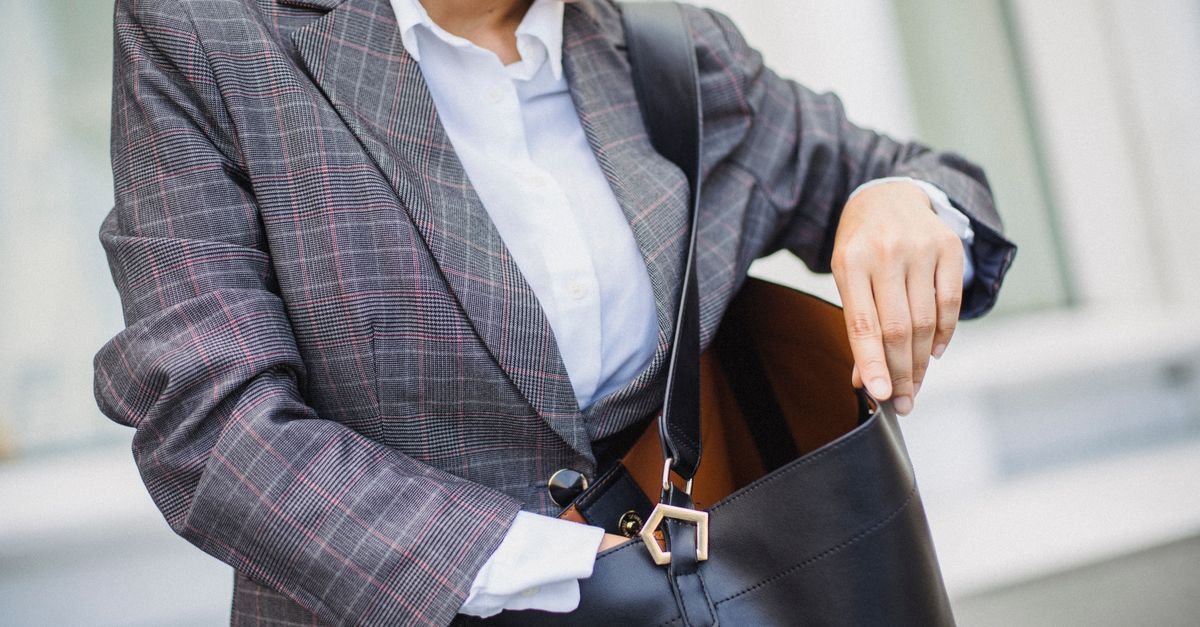
A blazer in navy or a muted plaid. If you can’t afford the brand’s own, hunt for a well-cut one in a neutral. You’ll wear it with trousers, with a dress, with dark denim. That’s the cost-per-wear math working in your favor.
Loafers. Not the fashion-forward kind — the boring, good ones. The kind you can scuff on a Tuesday and still wear to a Wednesday dinner.
And one layering piece — a knit or a sweater you can throw over everything else. The collection’s layered approach is the formula, not the individual item.
Ivy style survived more than a century because it’s a set of proportions, not a brand. J. Press just reminded everyone the archive is still the story. The rest of us can borrow from it at any price, in any season.
Wear it well — Elise